Measuring Progress in the Wrong Currency: How Western Frameworks Distort Ethiopia's Development Story
For much of the past two decades, Ethiopia has occupied a peculiar place in the Western imagination. Development economists cited its GDP growth figures with enthusiasm. Foreign policy analysts pointed to Addis Ababa—home to the African Union headquarters and a dense constellation of international organizations—as evidence of a continent finally coming into its own. Business publications ran breathless profiles of industrial parks rising from the dust of the Awash Valley. The story was clean, compelling, and exportable.
It was also, in critical respects, incomplete.
The gap between Ethiopia as Western observers have chosen to see it and Ethiopia as it is actually experienced by the majority of its citizens is not merely a matter of journalistic nuance. It reflects something more systemic: a persistent tendency to evaluate African development through economic metrics and institutional symbols that were designed in, and largely for, the context of Western liberal democracies. When those tools are applied uncritically to a country as historically complex and structurally diverse as Ethiopia, the result is a portrait that flatters donors, reassures investors, and misleads policymakers.
The Seduction of the Macro Number
Ethiopia's economic growth statistics during the 2000s and early 2010s were, by any conventional measure, remarkable. Annual GDP growth rates frequently exceeded eight percent, placing the country among the fastest-growing economies in the world. For institutions like the World Bank and the International Monetary Fund, such figures were cause for genuine optimism. For Western governments invested in demonstrating that aid and development finance could produce results, Ethiopia became something close to a model case.
But GDP growth, as development economists have argued for decades, is a notoriously blunt instrument. It captures the aggregate expansion of economic output without disaggregating who benefits, where growth is concentrated, or what social costs accompany it. In Ethiopia's case, rapid industrialization drew tens of thousands of workers into export-oriented manufacturing—garment factories, leather processing plants, and floriculture operations—under conditions that international labor rights organizations have repeatedly flagged as exploitative. Wage levels in the country's industrial parks ranked among the lowest globally, a fact that attracted foreign investment precisely because it suppressed the cost of production.
When Western analysts celebrated Ethiopia's industrial emergence, they were, in effect, celebrating a model that depended structurally on poverty wages. The macro number looked good. The lived reality was considerably more ambiguous.
The Rural Interior and Its Invisible Majority
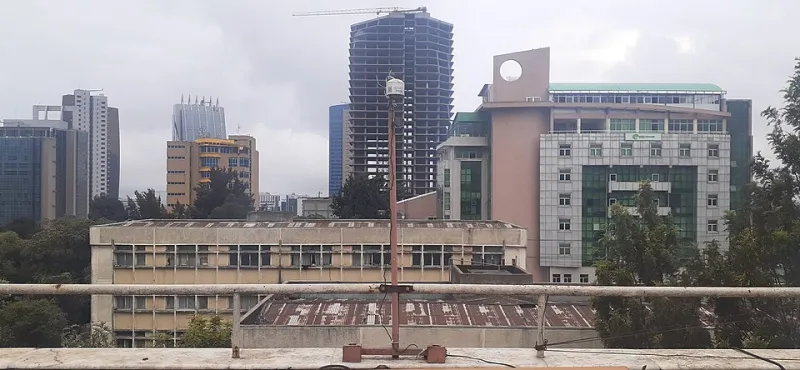
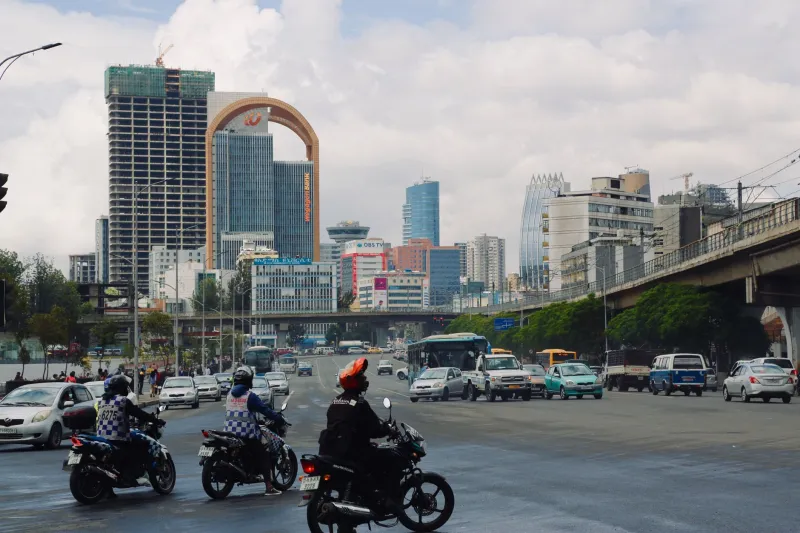
Approximately eighty percent of Ethiopia's population lives in rural areas, engaged primarily in smallholder agriculture. This is not a marginal footnote to the country's development story—it is the story, or at least the part of it that most directly shapes the daily lives of most Ethiopians. Yet it is precisely this dimension that tends to disappear when Western observers focus their attention on Addis Ababa's expanding skyline, its new light rail system, or its growing class of tech-adjacent entrepreneurs.
Rural Ethiopia faces challenges that no amount of urban infrastructure investment has yet resolved. Chronic food insecurity affects millions, particularly in lowland regions vulnerable to cyclical drought. Access to clean water, quality healthcare, and secondary education remains profoundly unequal across regional and ethnic lines. Land tenure insecurity—a consequence of the state's constitutional ownership of all land—continues to constrain smallholder investment and productivity. These are not temporary growing pains on the road to modernization; they are structural features of an agrarian economy that has received far less policy attention than the industrial parks that photograph well for development agency annual reports.
The rural-urban divide is not simply an economic gap. It is a governance gap, a services gap, and increasingly a political gap. Discontent in peripheral regions—the Oromia protests that intensified after 2014, the recurring tensions in the Somali and Afar regions, the catastrophic conflict in Tigray—cannot be understood apart from the profound sense among many rural and regional communities that the Ethiopian state's development vision has been designed for someone else.
Addis Ababa as Symbol and as Distortion
The city's prominence on the continental diplomatic stage has long functioned as a kind of shorthand for Ethiopian influence and African institutional maturity. Hosting the African Union, the United Nations Economic Commission for Africa, and dozens of multilateral bodies has given Addis Ababa a visibility that shapes how the country is perceived in Washington, Brussels, and beyond. For American foreign policy professionals, the city serves as an entry point into continental African affairs—a hub whose symbolic weight can easily be mistaken for evidence of the country's internal coherence.
But a capital's diplomatic profile and a country's developmental health are not the same thing, and conflating them produces serious analytical errors. The Ethiopian government has at various points leveraged its AU host status to deflect international scrutiny of domestic governance practices—a dynamic that became particularly visible during the Tigray conflict, when the country's continental institutional role complicated African Union efforts to respond meaningfully to a crisis unfolding in the organization's own backyard.
Western policymakers who had invested heavily in the Ethiopia-as-success-story narrative found themselves poorly positioned to respond when that narrative collapsed under the weight of a civil war that killed hundreds of thousands of people and displaced millions more. The analytical frameworks they had relied upon had not equipped them to see what was coming.
Rethinking the Metrics of Progress
None of this is an argument that Ethiopia has not made genuine developmental strides in specific domains. Gains in primary school enrollment, reductions in child mortality, and the expansion of basic health infrastructure represent real improvements in real lives. The country's capacity to host continental institutions reflects genuine diplomatic skill and historical significance. These achievements deserve acknowledgment.
What they do not deserve is the interpretive weight that Western development discourse has placed upon them—the tendency to read isolated improvements as confirmation of a broader transformation that has not yet occurred, and may not occur through the policy pathways currently being pursued.
For American policymakers and analysts who engage with Ethiopia, the more productive posture involves asking harder questions: Who is benefiting from growth, and at what cost? Which communities remain structurally excluded from the country's development trajectory, and why? How do governance deficits at the regional level interact with national-level policy ambitions? These are not questions that fit neatly into the Africa Rising narrative, but they are the questions that honest engagement with Ethiopian reality demands.
Progress, measured in the wrong currency, can obscure as much as it reveals. Ethiopia's story is too important—for the country itself, for the Horn of Africa, and for the broader project of understanding what sustainable development actually requires—to be reduced to a headline that serves someone else's purposes.
The think tank tradition, at its best, exists precisely to complicate comfortable narratives. Ethiopia's development model deserves that rigor more than it deserves another round of applause.