Beyond Addis: How Amhara's Grassroots Builders Are Quietly Rewriting the Rules of African Development
In Washington think tanks and Geneva conference halls, conversations about Ethiopian development tend to orbit a familiar set of coordinates: federal policy directives, World Bank lending portfolios, and the capital city's expanding skyline. What those conversations consistently miss is what is happening several hundred kilometers north, in the highlands and market towns of the Amhara region, where a different kind of institution-building is underway—quieter, slower, and arguably more durable than anything a foreign grant cycle can produce.
Amhara is not, by most conventional metrics, a story of success. The region has endured cycles of conflict, political marginalization, and chronic underinvestment. Yet within that adversity, something instructive is emerging: a decentralized development experiment driven not by external blueprints but by the intellectual and entrepreneurial communities that have chosen to remain, return, or rebuild. For policymakers and development scholars in the United States accustomed to measuring African progress through aid disbursement and GDP indicators, the Amhara case offers a genuinely different set of lessons.
The Limits of the Capital-Centric Model
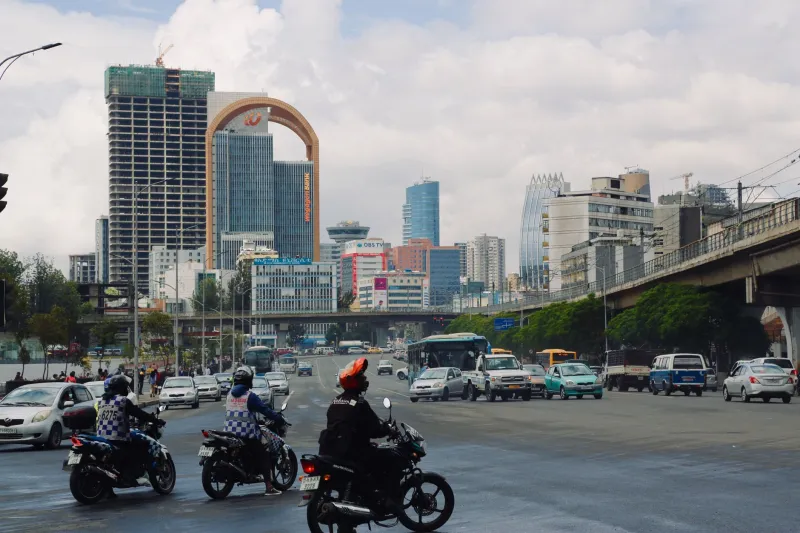
Ethiopia's federal structure was designed, at least in principle, to distribute power and resources across its diverse regions. In practice, development energy—financial, intellectual, and political—has remained heavily concentrated in Addis Ababa. This is not unique to Ethiopia. Across sub-Saharan Africa, capital cities absorb a disproportionate share of foreign direct investment, skilled labor, and institutional attention, leaving peripheral regions to navigate their own trajectories with limited external support.
For Amhara, that peripheral status has been compounded by the violence and displacement that accompanied the broader conflict engulfing northern Ethiopia in recent years. Infrastructure was damaged. Schools shuttered. Trained professionals fled. The conventional development wisdom would suggest that recovery, under such conditions, requires a massive infusion of external resources coordinated through centralized federal mechanisms.
What is actually happening defies that prescription in important ways.
Education as Institutional Anchor
Across several Amhara woredas—the administrative units roughly analogous to American counties—local educators, community elders, and diaspora-connected networks have worked to reopen and sustain schools using resources assembled outside formal state channels. In some cases, religious institutions with deep historical roots in the region have served as the organizational backbone, converting existing infrastructure into learning spaces while governments at various levels remained gridlocked.
This is not a romantic story of self-sufficiency. These efforts are fragile, inconsistently funded, and uneven in quality. But they represent something that external development actors rarely manage to engineer: genuine community ownership of an institution. When a school is rebuilt by the people whose children attend it, the incentive structures around its maintenance, its curriculum relevance, and its accountability to local norms are fundamentally different from those governing a school built to satisfy a donor's logframe.
Researchers studying post-conflict education recovery in comparable African contexts—from eastern Democratic Republic of Congo to northern Uganda—have documented similar dynamics. Communities do not wait for the state to restore normalcy. They construct provisional normalcy themselves, and those constructions sometimes prove more resilient than the formal systems they supplement.
Agricultural Adaptation Without the Agronomist
Amhara's agricultural communities have long operated at the intersection of ancient practice and hard environmental reality. The region's highlands are among Ethiopia's most productive farmlands, but they are also increasingly vulnerable to erratic rainfall patterns consistent with broader climate disruption across the Horn of Africa.
What is notable is how adaptation is occurring. Farmer networks—informal collectives organized around shared land, kinship, or market relationships—are exchanging information about seed varieties, planting schedules, and water management strategies in ways that bypass formal extension services entirely. Some of this knowledge exchange is happening through mobile phones. Some of it happens in the same communal spaces where agricultural decisions have been negotiated for generations.
U.S. development institutions, including USAID and various agricultural research foundations, have invested substantially in formal extension systems across Ethiopia. Those systems have genuine value. But the Amhara case suggests that parallel, informal knowledge networks are not simply a gap to be filled by professional agronomists—they are a form of institutional infrastructure in their own right, one that carries significant adaptive capacity precisely because it is not dependent on external inputs to function.
Governance from Below
Perhaps the most politically sensitive dimension of Amhara's decentralized development story involves governance. In the absence of reliable state services and amid ongoing security uncertainties, community-level governance structures have assumed responsibilities that would ordinarily fall to formal government entities: mediating land disputes, organizing collective security arrangements, and managing access to shared resources like water and grazing land.
For American policymakers watching Ethiopia from a distance, this dynamic is easy to misread. Community-level governance in conflict-affected regions is sometimes framed as a symptom of state failure—an emergency measure to be replaced as soon as formal institutions are restored. That framing misses the longer historical arc. Many of the governance traditions being activated in Amhara today have deep roots in the region's pre-modern institutional history. They are not improvisations born of desperation; they are adaptations of systems that predate the modern Ethiopian state by centuries.
The distinction matters enormously for policy. If external actors treat community governance as a temporary workaround, they risk undermining institutional forms that may ultimately prove more legitimate and more effective than the centralized alternatives they are designed to replace.
What the Amhara Case Teaches Development Theory
The development economics literature has spent decades debating the relative merits of top-down and bottom-up approaches to institutional change. The Amhara region, in its current moment, offers a live case study that resists easy categorization.
This is not a region that has opted out of state engagement. Amhara communities have consistently demanded more from the federal government—more security, more infrastructure investment, more political representation. The grassroots innovation happening in parallel is not a rejection of state capacity; it is a response to its temporary absence, and it carries implications for what durable state-community partnerships might look like once stability returns.
For U.S.-based researchers, philanthropic institutions, and government agencies engaged with Ethiopia, the practical implication is straightforward: the most productive entry points for external support may not be the ones that appear most legible from a distance. Funding that flows through established federal channels will always be easier to track and audit. But funding that finds and amplifies what communities are already building—on their own terms, using their own frameworks—may generate returns that compound in ways no logframe is designed to capture.
A Laboratory Worth Watching
Ethiopia's story is too often told as a single narrative of crisis or promise, alternating depending on the news cycle. The Amhara region's current experience suggests something more textured: that within even the most troubled contexts, communities are generating institutional knowledge that the broader development field has not yet learned to read.
The ancient kingdom's highlands are not waiting to be discovered by the next international commission. They are already in the process of rebuilding—on their own schedule, according to their own priorities, and with an institutional memory that extends well beyond the timeframe of any foreign development project. Whether the global policy community develops the sophistication to engage with that process on its own terms may be one of the more consequential development questions of the coming decade.