When Is Now? Ethiopia's Calendar and the arrogance of the Default
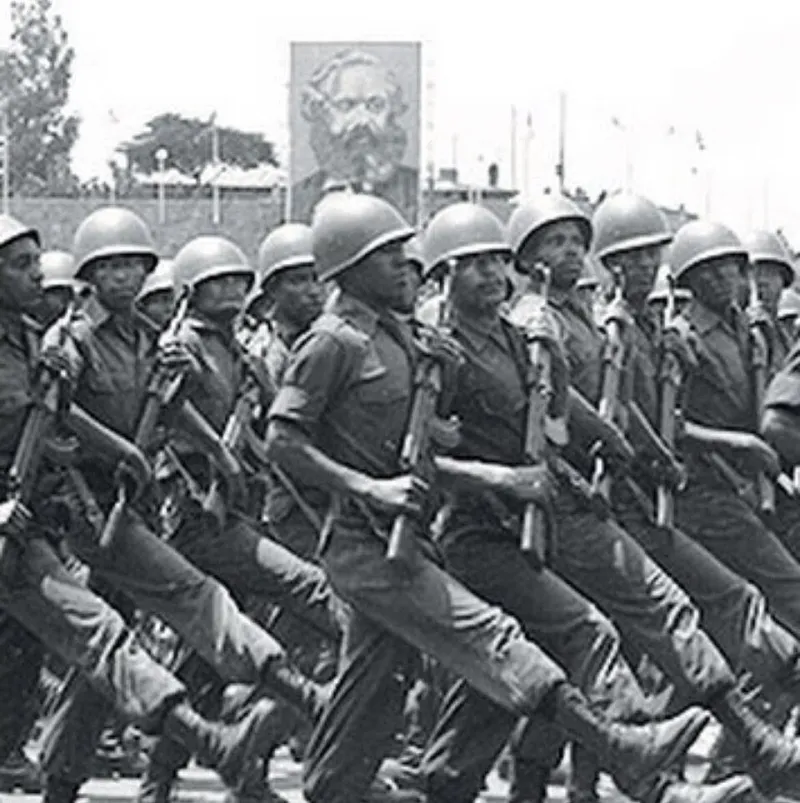
Photo: Unknown authorUnknown author, Public domain, via Wikimedia Commons
Every September, Ethiopia celebrates Enkutatash, its new year, while most of the world is two months into its own. The Ethiopian calendar runs thirteen months—twelve of thirty days, plus a short thirteenth month that absorbs the remainder—and it currently trails the Gregorian count by several years. An Ethiopian passport issued in 2016 was, by its own national reckoning, perfectly accurate. American border agents have not always agreed.
Time as Infrastructure
The instinctive American reaction is to file this under charming anachronism: a holdout in a globalized world of synchronized clocks. That reaction is worth interrogating, because it reveals an assumption so deep it goes unnoticed—that one system of timekeeping is the default and every other is a deviation from it.
Calendars are not measurements of nature. There is no natural fact about what year it is. The Gregorian calendar is a sixteenth-century papal reform of a Roman reform, adopted by the United States only in the eighteenth century amid legislative confusion. Ethiopia's calendar derives from the Coptic computation of the Annunciation. Both are conventions. Only one of them, however, gets to be the one that software assumes, that financial systems require, that diplomatic scheduling treats as neutral.
Where the Friction Shows Up
The practical consequences land on ordinary people. Ethiopian immigrants in the United States navigate dual dates constantly—filing documents in one calendar, celebrating holidays in another, explaining to an HR system why their birth year appears to be seven years off. Software forms that validate dates against Gregorian assumptions flag perfectly valid Ethiopian dates as errors. Development contracts, visa applications, and academic transcripts all require conversion, and the burden of conversion falls, always, on the party using the non-default system.
This is a small case of a large pattern. American technical standards—date formats, name fields, character encodings—are built on the premise that the American version is the unmarked case, and everyone else is an edge case. The seven-to-eight-year gap is not the problem. The problem is that American systems are rarely designed to even recognize that a second legitimate system exists.
What Policymakers Should Take From It
For US agencies engaged in the Horn of Africa, calendar literacy is not trivia. Scheduling diplomatic engagements around Ethiopian holidays, understanding that documents may carry Ethiopian dates, and building systems that accept non-Gregorian entries are inexpensive signals of seriousness. They communicate that engagement means meeting counterparts inside their frameworks rather than demanding they exist inside ours.
For technology companies, the opportunity is more interesting than compliance. A calendar system this distinctive is also a design challenge that, once solved, generalizes: software that genuinely supports multiple calendrical systems serves billions of people who live by lunar, fiscal, or religious calendars the Gregorian framework ignores. The edge case, properly handled, becomes a feature.
The Deeper Point
Thirteen months of sunshine—the phrase Ethiopians use, with some justification, to describe their climate and their calendar—is a reminder that universality is usually just localness with better distribution. America's timekeeping is not the world's clock; it is one clock among many that happened to win the infrastructure war.
Ethiopia, never colonized, never had its conventions overwritten by an imperial administrator, and its calendar is one of the surviving records of that independence. The mature American response is neither condescension nor novelty-seeking, but a modest recalibration: the recognition that the default is a choice, that choices have alternatives, and that a country planning to remain globally engaged might occasionally check which year it is—by someone else's reckoning.