Bones in the Afar, Stakes in the Partnership: Rethinking Fifty Years of American Science in Ethiopia
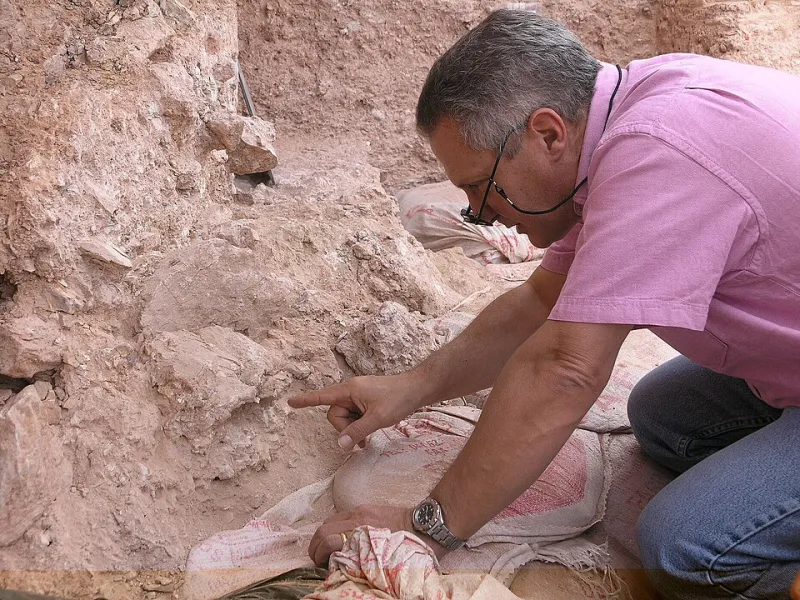
Photo: Shannon McPherron, Max Planck Institute for Evolutionary Anthropology. Leipzig, Germany, CC BY-SA 2.0, via Wikimedia Commons
In 1974, an American-led team working in Ethiopia's Afar region uncovered a partial skeleton that rewrote the human story. Lucy—Dinknesh, 'you are marvelous,' in Amharic—was 3.2 million years old and, in the popular imagination, immediately American property in everything but location. She spent decades in a Cleveland museum vault. The fossils were Ethiopian; the prestige, the publications, and for a long time the interpretive authority were not.
The Old Bargain
The arrangement that governed much of twentieth-century paleoanthropology was straightforward: foreign institutions brought funding, expertise, and publishing networks; host countries supplied sites, labor, and specimens. Ethiopian researchers worked alongside the expeditions, but the career ladder pointed toward universities in Michigan, Berkeley, and Cleveland rather than Addis Ababa. The science was real and often excellent. The structure was colonial in everything but name.
What makes the Ethiopian case instructive is what happened next. Rather than remaining a permanent excavation site, Ethiopia built institutional capacity. The National Museum in Addis became the custodian of the country's paleontological patrimony. Ethiopian institutions now co-lead fieldwork, control permits, and train their own doctoral researchers. Lucy herself returned home in 2013 for a decade-long exhibition—a repatriation that would have been unthinkable in the field's earlier era.
The Next Generation of Collaboration
The scientific relationship now extends well beyond fossils, and the new fields carry higher stakes than old ones. Genomics partnerships promise enormous medical value but raise familiar warnings: African genetic diversity is the world's richest scientific resource, and the history of biospecimen collection on the continent is a history of samples flowing out and benefits failing to flow back. Data governance agreements, local sequencing capacity, and Ethiopian co-authorship at the first-author level are not courtesies; they are the difference between partnership and harvest.
Geothermal energy tells a different story. The Rift Valley's heat is an Ethiopian resource being developed largely with Ethiopian priorities, and American technical engagement—drilling expertise, financing instruments, university training programs—can plug into a national agenda rather than substitute for one. This is what scientific diplomacy looks like when the host country holds the pen.
A Template Worth Writing Deliberately
For Washington, the strategic logic is unambiguous. China funds laboratories across the continent with few questions asked; the United States cannot compete with blank checks, but it can compete with something harder to replicate: a fifty-year record of shared scientific achievement, a large Ethiopian-American academic diaspora, and genuine mutual interest. The Lucy collaboration, reformed, is the best available proof of concept.
Three commitments would make the template credible. First, fund Ethiopian institutions directly rather than routing all resources through American universities. Second, treat data and specimens under the same sovereignty logic that now governs fossils. Third, measure success by where the next generation of Afar-born paleoanthropologists and geoscientists builds their careers—not by how many papers bear American letterheads.
The bones in the Afar made Ethiopia central to everyone's origin story. The partnership that followed should be judged by a simpler question: whether the next marvelous discovery belongs, in every sense, to the ground it came from.