From Injera to Iowa: The Case for Treating Teff as Strategic Infrastructure
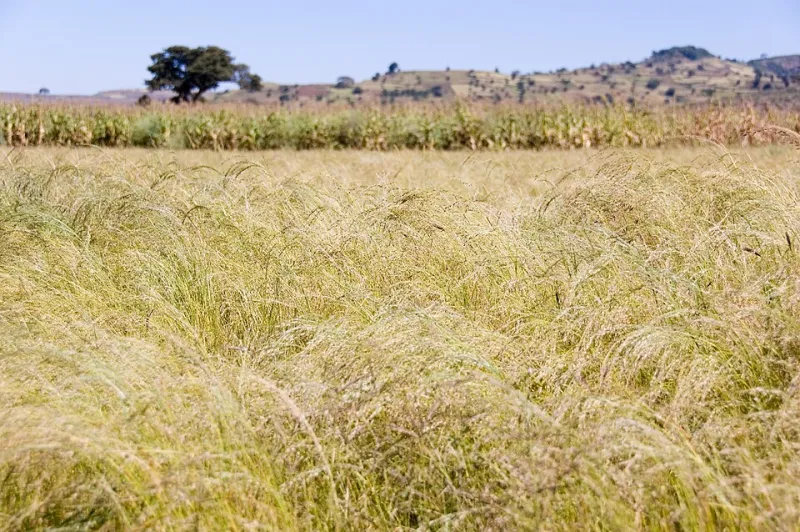
Photo: A. Davey from Where I Live Now: Pacific Northwest, CC BY 2.0, via Wikimedia Commons
Walk down the baking aisle of any Whole Foods in Austin or Seattle and you will find it: a small, unassuming grain marketed as the next quinoa. Teff, the world's tiniest cereal grain, has completed a journey from the injera tables of Addis Ababa to the wellness shelves of American natural food stores. What the packaging rarely mentions is where the story actually began—and who stands to lose if the next chapter is written entirely in English.
A Grain Built for the Climate We Now Have
Ethiopian farmers have cultivated teff for somewhere between three and six thousand years, refining it in the challenging conditions of the highlands. The agronomic facts are striking. Teff matures in as little as ninety days. It tolerates drought, waterlogging, and marginal soils that would defeat corn or wheat. It resists most storage pests without chemical treatment. In an American agricultural landscape increasingly battered by flash droughts and erratic rainfall, these are not exotic curiosities—they are traits plant breeders at land-grant universities would pay dearly to access.
The commercial signal is already visible. American demand for gluten-free products has created a market hungry for alternatives to rice and corn flour, and teff's nutritional profile—rich in iron, calcium, and resistant starch—fits the moment. Farmers in Idaho and Nevada have begun experimental plantings. If the trajectory resembles quinoa's, teff could move from niche to mainstream within a decade.
The Patent Question Nobody Wants to Discuss
Here is where the story darkens. Quinoa's boom famously lifted Andean prices while complicating food security in Bolivia and Peru. Teff's risks are more immediate and more legal. Ethiopian landraces—the product of millennia of farmer selection—have already been the subject of international controversy. In the mid-2000s, a Dutch company's attempts to patent teff-derived products sparked a dispute that ended in settlement, but the underlying vulnerability remains: Ethiopia's genetic resources exist in international gene banks and commercial pipelines with limited benefit-sharing mechanisms.
American startups are now developing teff-based food products, and the intellectual property architecture of US agriculture—utility patents, plant variety protection—does not naturally recognize the contributions of the Ethiopian farmers whose selection work made modern teff possible. This is biopiracy not as a cartoon villain scenario, but as a quiet structural outcome of how IP law is written.
What Fair Partnership Looks Like
A serious bilateral framework would include three commitments. First, access and benefit-sharing agreements consistent with the Nagoya Protocol, ensuring royalties or licensing revenue flow back to Ethiopian institutions and farming communities. Second, joint research programs—Ethiopian germplasm expertise paired with American processing technology and market access—rather than extraction dressed up as collaboration. Third, investment in Ethiopia's own teff processing capacity, so value addition happens in Debre Zeit as well as Des Moines.
The Ethiopian government's own restrictions on raw teff exports, designed to protect domestic food prices, reflect a country that has learned from the quinoa precedent. Washington should read that not as trade obstruction, but as a negotiating position from a partner that understands exactly what is at stake.
The Bigger Signal
How the United States handles teff will be read across Africa as a test case. Treat Ethiopian agriculture as a source of raw genetic material to be patented abroad, and the US confirms every suspicion about the extraction model. Build genuine partnership, and American companies gain a resilient crop, American consumers gain a superior food product, and Ethiopian farmers gain a fair share of a market their ancestors created.
The grain that fed empires deserves better than a quiet land grab. It deserves a deal.