Roots Before Remedies: How Ethiopia's Traditional Healers Are Redefining Rural Public Health—and What American Institutions Are Finally Admitting
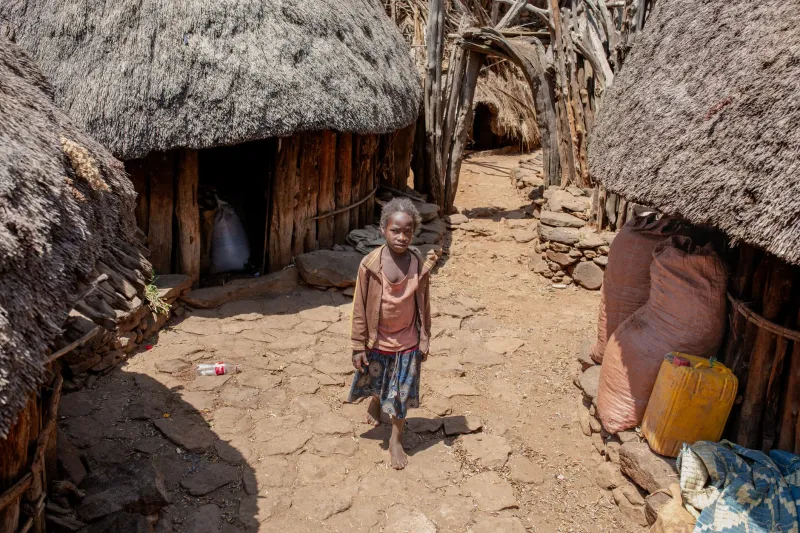
In a small compound outside Lalibela, a healer known locally as a wogesha diagnoses a child's respiratory condition through a combination of tactile examination, herbal preparation, and a ritual conversation with the family about the household's recent history. No stethoscope. No referral form. No co-pay. Within three days, the child improves. A government clinic four kilometers away sits underutilized—not because the community distrusts medicine, but because the clinic's rotating staff of externally trained practitioners speaks a different cultural language entirely.
This is not an anecdote about superstition triumphing over science. It is a policy failure hiding in plain sight.
A System Built Without Its Users in Mind
Ethiopia's formal healthcare infrastructure has expanded considerably over the past two decades. The Health Extension Program, launched in the early 2000s, deployed thousands of community health workers into rural kebeles and produced measurable gains in maternal and child health indicators. By most international benchmarks, Ethiopia is considered a public health success story in sub-Saharan Africa.
Yet those benchmarks mask a persistent gap. Rural utilization of formal health services remains structurally low in many regions, particularly for conditions that carry social stigma—mental illness, reproductive disorders, chronic pain syndromes—or that are understood within communities through spiritual and relational frameworks rather than biomedical ones. In these categories, traditional healers do not merely supplement the formal system. They are the system.
The World Health Organization estimates that roughly 80 percent of Ethiopia's population relies on traditional medicine as a primary healthcare resource. That figure is frequently cited by global health advocates as evidence of a deficit—a shortfall of modern infrastructure to be corrected. A more honest reading is that it reflects a deliberate choice by communities who have evaluated both options and found one consistently more responsive to their actual lives.
What Healers Know That Clinics Don't
The explanatory power of traditional Ethiopian medicine lies not only in its pharmacopoeia—though Ethiopian botanical knowledge is genuinely extensive and increasingly validated by ethnopharmacological research—but in its epistemological architecture. Traditional healers operate within a framework that integrates the physical, the relational, and the spiritual into a single diagnostic and therapeutic encounter.
When a debtera, a scholar-healer rooted in the Ethiopian Orthodox tradition, treats what Western psychiatry would classify as a depressive episode, the intervention is simultaneously herbal, liturgical, and social. The patient's family is implicated. The community's spiritual state is considered. The healer's authority derives from a lineage of transmitted knowledge that the patient recognizes and trusts. Compliance is not a clinical challenge—it is embedded in the therapeutic relationship itself.
American health researchers studying treatment adherence in low-resource settings have repeatedly encountered a counterintuitive finding: patients who receive diagnoses and prescriptions from formally trained clinicians but also consult traditional healers often exhibit better adherence to both treatment streams than those who use only one. The explanation is not mystical. It is social. Healing that is culturally legible is healing that is followed through.
The Economics of Accessible Care
There is also a straightforward economic dimension that international health policy has been slow to absorb. Traditional healers charge fees calibrated to local economic realities, accept payment in kind, defer payment for families in acute distress, and operate within the same informal credit networks as their patients. They do not require insurance documentation, government-issued identification, or transport to a district town.
For the rural Ethiopian household earning less than two dollars a day, the formal healthcare system—even when nominally free at the point of service—carries substantial hidden costs: lost labor days, transport fees, the social cost of navigating bureaucratic settings in which one is often made to feel peripheral. Traditional healers eliminate most of these friction points by design, because they are embedded in the same economic precarity as their patients.
This is not a romanticization of poverty. It is an observation about institutional fit. A healthcare system designed for a different economic reality will underperform in the one it actually inhabits.
American Organizations and the Slow Pivot Toward Partnership
For much of the twentieth century, American global health strategy operated on an implicit civilizational premise: that modernization in healthcare meant replacing indigenous practice with biomedical standardization. USAID programs, missionary health networks, and major philanthropic foundations built clinics, trained physicians in Western protocols, and measured success by the displacement of traditional alternatives.
That model is under significant internal pressure. Organizations including the Gates Foundation, Partners in Health, and a growing number of American academic medical centers have begun funding research into integrative approaches that treat traditional healers as stakeholders rather than obstacles. In Ethiopia specifically, pilot programs in regions including Oromia and the Southern Nations have experimented with formal referral relationships between government health posts and recognized traditional practitioners—allowing each system to handle the conditions it manages most effectively while ensuring patients are not lost between them.
The results are preliminary but encouraging. Communities with formalized healer-clinic partnerships show higher rates of antenatal care registration, improved treatment-seeking behavior for childhood illness, and—critically—greater trust in formal health workers, who are no longer perceived as agents of cultural displacement.
The Policy Argument That Still Needs Making
Despite this progress, traditional medicine remains institutionally marginalized in Ethiopia's national health policy framework. Healers operate without licensure, without liability protection, and without access to the supply chains and diagnostic tools that would allow them to refer patients more precisely. The knowledge they carry—accumulated across generations and validated by centuries of community use—is not systematically documented, creating a real risk of irreversible loss as elder practitioners age without successors trained in formal settings.
Ethiopian policymakers and their American partners face a choice that is both technical and philosophical. They can continue treating traditional medicine as a transitional phenomenon to be gradually superseded, or they can invest in its formalization—developing credentialing pathways, supporting ethnobotanical research, and building referral architectures that make the two systems genuinely complementary.
The second path is harder. It requires acknowledging that the communities being served have already made a rational judgment about which forms of care work for them, and that policy should follow that judgment rather than override it.
Conclusion: Listening as a Health Intervention
The wogesha outside Lalibela is not a curiosity or a relic. He is a functioning node in a healthcare network that serves millions of Ethiopians who would otherwise have no meaningful access to care. His methods deserve rigorous study, honest evaluation, and—where evidence supports—institutional respect.
American global health institutions that are finally beginning to partner with traditional healers deserve credit for the shift. But the more important lesson is structural: systems that are designed without the participation of the communities they serve will always underperform. Ethiopia's traditional healers did not outpace pharmaceuticals in rural Africa by being more scientifically sophisticated. They outpaced them by being present, trusted, and fluent in the lives of the people they treat.
That is not a gap that any amount of foreign aid can close. It is a lesson that has to be learned.