Ancient Forests, Living Faith: How Ethiopian Monasteries Became Unlikely Allies in the Fight to Save Biodiversity
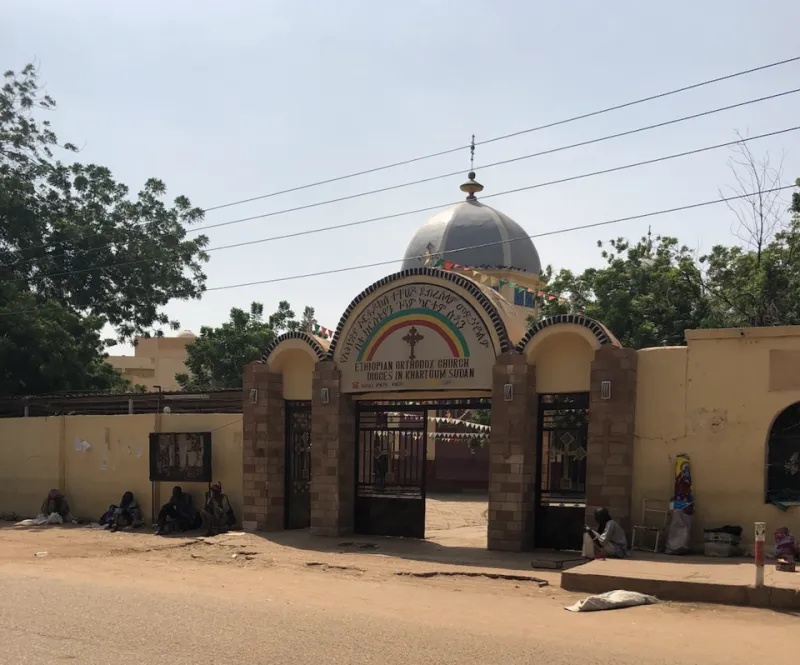
Photo: Chansey, CC BY-SA 4.0, via Wikimedia Commons
Fly low over the Ethiopian highlands and a striking pattern emerges from the landscape below. Amid the brown and ochre expanse of heavily cultivated farmland, dense islands of dark green forest appear at regular intervals—each one circular, each one centered on the white dome of an Ethiopian Orthodox church. These are not the remnants of some ancient reforestation project. They are, in the most literal sense, the physical footprint of a theology that regards the natural world as sacred space.
What environmental scientists have spent decades trying to engineer through policy mechanisms, carbon markets, and community forestry programs, Ethiopian Orthodox Christianity has preserved through something far older and arguably more powerful: a living cosmological framework that makes forest destruction not merely inadvisable, but spiritually impermissible.
The Ecology of the Sacred Grove
The church forests of Ethiopia—estimated to number in the tens of thousands and concentrated particularly in the Amhara and Tigray regions—represent one of the most significant reservoirs of native biodiversity remaining in the Ethiopian highlands. In areas where deforestation has reduced original forest cover to less than five percent, these sacred groves sometimes constitute the only remaining habitat for endemic plant and animal species that exist nowhere else on Earth.
Research conducted over the past two decades by ecologists working in collaboration with institutions including Bahir Dar University and international partners has documented the extraordinary biological richness contained within these monastic boundaries. A single church forest in the North Gondar zone may harbor hundreds of plant species, function as a critical watershed for surrounding agricultural communities, and support bird and mammal populations that have been entirely extirpated from the adjacent landscape.
The monks and priests who maintain these spaces do not typically describe their stewardship in the vocabulary of ecosystem services or carbon sequestration. They describe it in terms of reverence—a responsibility to preserve the integrity of the ground on which the divine has, in their understanding, chosen to dwell. Yet the ecological outcomes of that reverence are, by any measurable standard, remarkable.
Where Theology and Science Converge
The intersection of faith and environmental science in Ethiopia is not a recent development engineered by outside NGOs. It is an organic relationship that has been quietly deepening for decades, shaped by a mutual recognition of shared purpose. Ethiopian Orthodox clergy have increasingly engaged with conservation researchers not as supplicants seeking external validation, but as partners who bring their own sophisticated body of knowledge to the table.
The Ethiopian Orthodox Tewahedo Church's formal environmental declarations—including statements from the Holy Synod that explicitly frame ecological destruction as a theological transgression—have provided institutional scaffolding for this collaboration. When a religious institution with an estimated 40 to 50 million adherents issues doctrinal guidance that connects environmental stewardship to spiritual obligation, the behavioral implications are profound in ways that no government regulation or market incentive can easily replicate.
Organizations like the Ethiopian Orthodox Church Development and Inter-Church Aid Commission have worked alongside secular conservation bodies to develop what might be described as a hybrid management framework—one that respects the spiritual authority of local clergy while incorporating ecological monitoring, boundary demarcation, and community education components drawn from conservation science. The results have been compelling enough to attract serious attention from institutions including the World Bank, the United Nations Environment Programme, and several prominent American university research centers.
A Model That Challenges Western Conservation Orthodoxy
For American environmental policymakers and development practitioners, the Ethiopian church forest model carries implications that extend well beyond the Horn of Africa. The dominant paradigm in Western conservation has long privileged state-managed protected areas, market-based instruments like REDD+ carbon credits, and technocratic governance frameworks administered by professional conservation organizations. These tools have genuine value, but their track record in contexts characterized by weak state capacity, high community dependence on natural resources, and limited institutional trust is decidedly mixed.
What the Ethiopian model demonstrates is that durable conservation outcomes can be achieved—and sustained across centuries, not merely grant cycles—when environmental protection is embedded within a value system that communities already inhabit and genuinely believe. This is not a romantic argument for the superiority of tradition over science. It is a rigorous empirical observation: the church forests have survived not because of external enforcement, but because the communities surrounding them have internalized a framework that makes their protection feel personally meaningful.
For American researchers studying community-based natural resource management, this distinction matters enormously. The transaction costs of conservation compliance drop dramatically when the relevant norms are encoded in religious identity rather than regulatory obligation.
Scaling the Lesson Without Distorting It
The challenge for global environmental policy is how to learn from the Ethiopian church forest model without extracting it from the cultural and spiritual context that gives it life. Attempts to replicate faith-based conservation frameworks in other settings have sometimes stumbled precisely because they treated the institutional structure as the transferable element while neglecting the deeper cosmological substrate that makes it function.
Ethiopia's contribution to global environmental thought may ultimately lie less in any specific technical practice than in the broader epistemological argument it advances: that the separation of scientific knowledge from moral and spiritual frameworks is not a prerequisite for effective environmental governance, but a cultural assumption—one that many of the world's most biodiverse and ecologically resilient communities have never made.
As the United States and its partners continue to grapple with the limitations of conventional conservation approaches in an era of accelerating biodiversity loss, the ancient forests ringing Ethiopia's hilltop churches offer a form of evidence that is simultaneously humbling and generative. The monks tending these spaces did not need a sustainability framework. They needed a theology—and it turned out to be enough.