Memory as Resistance: How Tigrayan Intellectuals Are Rebuilding a Civilization's Story from the Outside In
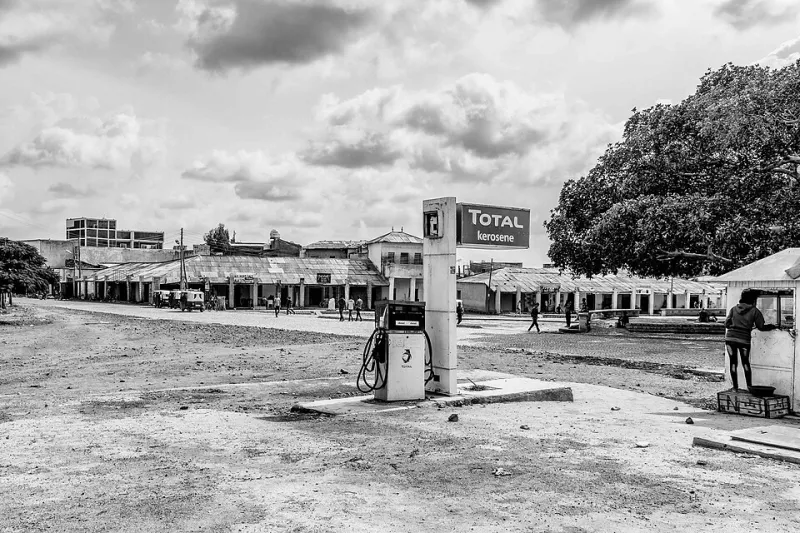
Photo: Rod Waddington, CC BY-SA 2.0, via Wikimedia Commons
There is a particular kind of violence that does not announce itself with weapons. It works instead through erasure — the destruction of archives, the silencing of languages, the deliberate removal of a people's presence from the historical record. For Tigrayan communities, the conflict that erupted in northern Ethiopia in November 2020 carried both kinds of violence simultaneously. The physical devastation has been extensively documented. The cultural and intellectual dimension has received far less attention, yet it may prove equally consequential for how Tigray — and Africa more broadly — is understood in the decades ahead.
What has emerged in the conflict's wake is something unexpected: a renaissance of Tigrayan intellectual and cultural production, driven largely from outside Ethiopia's borders, and increasingly visible in American universities, digital platforms, and global media ecosystems.
The Scale of What Was Lost
To understand what is being rebuilt, one must first reckon with what was destroyed. The Tigray region is home to some of the oldest continuous civilizations on the African continent. The Aksumite Empire, which flourished between roughly 100 and 940 CE, produced monumental architecture, a distinctive written script — Ge'ez — and a tradition of Christian scholarship that predates most European ecclesiastical learning. Tigrayan identity is inseparable from this heritage.
During the 2020–2022 war, reports documented the looting and destruction of churches, monasteries, and cultural sites across the region. The ancient monastery of Debre Damo, the rock-hewn churches of the Tigray highlands, and numerous community archives containing manuscripts centuries old were reported damaged or compromised. UNESCO and international heritage organizations raised alarms, but the scale of cultural loss has been difficult to quantify amid the fog of an ongoing conflict.
Beyond physical destruction, the conflict produced a digital and communicative blackout. Internet and telephone services were cut across Tigray for extended periods, severing the region's population from the outside world and creating an information vacuum that was filled — often inaccurately — by competing political narratives.
The Diaspora as Cultural Infrastructure
It is within this vacuum that the Tigrayan diaspora, concentrated in communities across the United States, Canada, and Western Europe, assumed a function it had not previously held: that of cultural custodian and intellectual advocate.
In cities like Washington, D.C., Minneapolis, and Toronto — home to some of the largest Ethiopian and Tigrayan diaspora populations in the world — community organizations pivoted rapidly from social support functions to documentation projects. Oral history initiatives were launched to record testimonies from survivors who had reached safety abroad. Digital archives were assembled, drawing on family photographs, personal manuscripts, and community records that individuals had carried with them.
Academics of Tigrayan heritage, many of them embedded in American research universities, began producing scholarship with a new urgency. Papers on Aksumite history, Ge'ez linguistics, Tigrayan ecclesiastical art, and the region's pre-colonial political economy appeared in journals and conference proceedings with a frequency that reflected both intellectual purpose and something closer to moral obligation. The act of publishing — of asserting the existence and complexity of Tigrayan civilization in peer-reviewed venues — became, in itself, a form of resistance.
Digital Platforms and the New Public Intellectual
Beyond academia, a generation of younger Tigrayan intellectuals has found voice through digital platforms in ways that are fundamentally reshaping who gets to narrate African history for global audiences.
YouTube channels, podcasts, and Substack publications run by Tigrayan scholars and journalists have attracted audiences well beyond the diaspora. These platforms operate outside the editorial gatekeeping of traditional media institutions — institutions that, during the height of the conflict, were frequently criticized by Tigrayan communities for amplifying Ethiopian government narratives and underreporting atrocities. By building direct relationships with audiences, these creators have demonstrated that African intellectual authority does not require the endorsement of Western editorial hierarchies to reach global scale.
This is not a uniquely Tigrayan phenomenon. Across the African continent, from Sahrawi activists documenting life in Western Sahara to Congolese historians reclaiming precolonial political philosophy on social media, marginalized communities are discovering that the infrastructure of digital communication has lowered the barriers to intellectual self-representation in historically significant ways. But the Tigrayan case is distinctive in its speed and in the degree to which it has been animated by the specific trauma of cultural erasure during wartime.
What the Reclamation Reveals
The emergence of this intellectual movement carries implications that extend well beyond Tigray's borders. For American scholars and policymakers who engage with African affairs, it offers a corrective to several persistent misconceptions.
First, it challenges the assumption that conflict produces only destruction. The Tigrayan experience suggests that catastrophic violence can also catalyze cultural mobilization — that communities facing existential threats sometimes respond by investing more deeply in the intellectual and artistic practices that define them. This dynamic has historical precedents, from the Harlem Renaissance emerging from the violence of the Great Migration era to the flowering of Irish literary nationalism during the colonial period. The Tigrayan renaissance belongs to this tradition.
Second, it complicates the narrative of African intellectual dependency on Western institutions. The scholars and artists driving this reclamation are frequently credentialed by American and European universities, but they are not waiting for those institutions to validate their work or set its agenda. They are producing knowledge about Africa for global audiences on terms they define themselves — a shift that has implications for how African studies programs, foreign policy think tanks, and international media organizations approach the continent.
Third, it raises urgent questions about the preservation of cultural heritage in conflict zones. If the international community failed to prevent the destruction of Tigrayan cultural sites during active conflict, the burden of preservation fell disproportionately on communities with the fewest resources. That the diaspora managed to absorb this burden is remarkable. That it was required to do so at all represents a failure of international heritage protection mechanisms that deserves serious policy attention.
A Civilization Insisting on Its Own Complexity
In conversations with Tigrayan scholars based at American institutions, a recurring phrase surfaces: the insistence that Tigray be understood not primarily through the lens of victimhood, but through the lens of civilization. The conflict, devastating as it was, is one chapter. The Aksumite legacy, the Ge'ez literary tradition, the distinctive architecture of the highland churches, the philosophical contributions of Tigrayan theologians — these are the chapters that the current generation of intellectuals is determined to write into the global record.
This determination is itself a form of geopolitical assertion. In a world where narrative power shapes resource allocation, diplomatic attention, and historical memory, communities that control their own stories exercise a form of influence that is often underestimated by conventional foreign policy analysis.
For those of us watching from the United States — whether as policymakers, academics, journalists, or simply as citizens engaged with the world — the Tigrayan intellectual renaissance is a reminder that Africa's most consequential conversations are increasingly being conducted by Africans, in languages and on platforms of their own choosing, directed at audiences they are building themselves. The question is whether American institutions are prepared to listen on those terms.