Ink and Identity: How Ethiopian Writers Are Rewriting the Terms of Global Cultural Authority
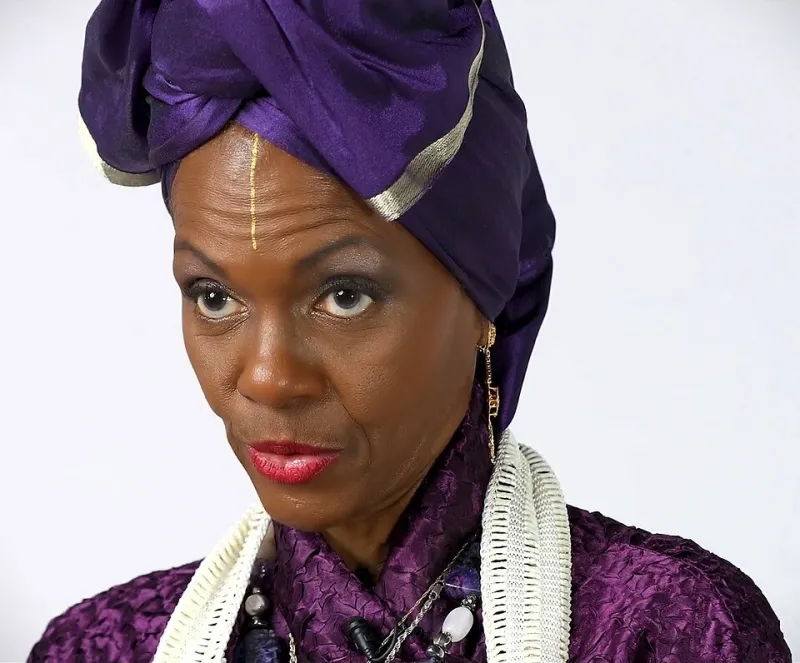
Photo: Tehutifilms, CC BY 3.0, via Wikimedia Commons
There is a particular kind of erasure that happens slowly, through accumulation. It occurs not through outright censorship but through the quiet dominance of certain storytelling traditions over others—through which voices are amplified by major publishing houses, which narratives win international prizes, and whose imaginative frameworks become the default through which entire continents are understood. For decades, Africa's story in the Western literary canon was largely told by outsiders, or by African writers whose work was filtered through the editorial preferences of publishers in New York and London.
That arrangement is changing. And Ethiopia, a nation whose written literary tradition stretches back to the Ge'ez manuscripts of the fourth century, is at the center of a quiet but consequential shift.
The Weight of Borrowed Narratives
American readers encounter Africa most frequently through a predictable set of images: famine, conflict, wildlife, and occasionally the inspirational exception who transcends adversity. These images are not fabrications—they reflect real conditions. But they are radically incomplete, and their incompleteness has carried real costs. When policymakers, investors, and the general public hold impoverished mental models of a continent home to 1.4 billion people and 54 sovereign nations, the consequences ripple through foreign aid allocations, trade agreements, and diplomatic postures.
Literature has always been one of the most powerful instruments for correcting such distortions. Chimamanda Ngozi Adichie's 2009 TED Talk, "The Danger of a Single Story," became one of the most-watched lectures in the platform's history precisely because it named this phenomenon with uncommon clarity. But Adichie's intervention, important as it was, represented a beginning rather than a resolution. The structural conditions she identified—publishing gatekeeping, prize culture, curriculum dominance—remain largely intact.
What has changed is the determination and sophistication with which a new cohort of writers is navigating, subverting, and in some cases bypassing those structures entirely.
Ethiopian Voices in a Global Register
Ethiopia's literary landscape is layered and often underappreciated outside specialist circles. The country possesses one of the oldest written languages in continuous use—Amharic—and a tradition of oral and written literature that predates European contact with much of the continent. Yet Ethiopian literature has historically received scant attention from international publishers and award committees that have shown greater appetite for Anglophone African fiction.
This is beginning to shift. Writers such as Maaza Mengiste, whose novel The Shadow King was longlisted for the Booker Prize in 2020, have demonstrated that Ethiopian narratives can command global literary stages without sacrificing specificity or complexity. The Shadow King reconstructed the story of Ethiopian women who fought Italian fascism during the 1935 invasion—a history virtually absent from Western curricula—through prose that was simultaneously lyrical and politically urgent. The book's international reception was not merely a cultural event; it was a soft power intervention, inserting Ethiopian historical agency into a global conversation that had long excluded it.
Younger writers working in Amharic, Oromo, Somali, and other Ethiopian languages are building audiences through digital platforms that circumvent traditional publishing gatekeepers. Social media, podcasting, and self-publishing ecosystems have created distribution channels that allow writers to reach diaspora communities across the United States, Europe, and the Gulf states without seeking validation from institutions historically indifferent to their work.
Literature as Cultural Policy
The connection between literary production and national soft power is well established in other contexts. The British Council has long used literature as a diplomatic instrument. France's system of cultural institutes worldwide promotes Francophone writing as a vehicle of influence. The United States funds international literary exchanges through programs administered by the State Department. These are not incidental cultural activities—they are deliberate investments in narrative authority.
African governments have been comparatively slow to recognize literature's policy dimensions, but that calculation is evolving. Ethiopia's Ministry of Culture and Tourism has expanded support for domestic publishing infrastructure in recent years, and the Ethiopian Publishers and Booksellers Association has worked to formalize a sector long operating informally. These institutional investments matter because they determine whether emerging writers have the material conditions to sustain careers—or whether talent continues to emigrate to cities where literary infrastructure exists.
For US cultural institutions and foundations engaged with Africa, this represents an underappreciated opportunity. Investment in African literary ecosystems—through translation funds, residency programs, and distribution partnerships—yields returns in mutual understanding that no amount of traditional public diplomacy can replicate. When American readers encounter Ethiopian fiction on its own terms, they develop intuitions about the country that no policy brief can manufacture.
The Economics of Representation
Representation is not only a cultural value; it is an economic one. The global creative economy—encompassing publishing, film, music, and digital media—generates trillions of dollars annually. Africa's share of that economy remains disproportionately small relative to its population and creative output, in part because the infrastructure for monetizing cultural production remains underdeveloped.
Ethiopian writers who achieve international recognition frequently do so through a paradox: their success depends on platforms and institutions located outside Ethiopia, which means that much of the economic value their work generates flows elsewhere. Diaspora writers navigating dual identities—writing about Addis Ababa while living in Minneapolis or Washington, D.C.—occupy a particularly complex position, simultaneously amplifying Ethiopian narratives and embodying the brain drain that diminishes domestic creative capacity.
Addressing this paradox requires policy imagination. Tax incentives for domestic publishing investment, bilateral cultural agreements that facilitate rights translation across languages, and university curricula that treat African literature as intellectually central rather than peripherally exotic—these are not utopian proposals. They are the kinds of structural interventions that have worked in other contexts and deserve serious consideration from both Ethiopian policymakers and their international partners.
Why This Matters Beyond the Page
At its core, the movement to reclaim African narrative authority is a contest over epistemic power—over who gets to define what Africa is, what it has been, and what it might become. This contest has direct implications for how the United States engages with Ethiopia and the continent more broadly.
American foreign policy toward Africa has too often been shaped by narratives of deficiency—what African nations lack, where they have failed, what they need from external actors. A richer literary culture, one that presents Ethiopian society in its full complexity, gradually corrodes these reductive frameworks and creates space for partnerships grounded in mutual respect rather than asymmetric charity.
The writers working in Amharic coffee shops and diaspora apartments across the United States are doing something that no policy paper can fully accomplish: they are making Ethiopia imaginable in its entirety. That is, ultimately, the precondition for everything else.