Returning to Build: The Ethiopian Scientists Defying the Brain Drain and Rewriting Africa's Research Narrative
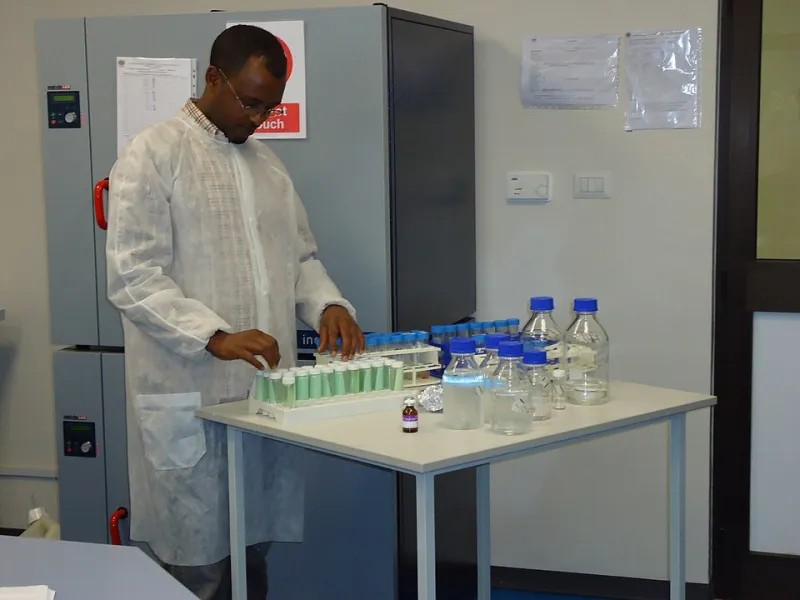
Photo: Senanol, CC BY-SA 4.0, via Wikimedia Commons
The conventional wisdom about African scientific talent has long been grim and largely accurate: the continent trains its most capable minds, and the world's wealthiest nations absorb them. Ethiopia has been no exception to this pattern. For much of the post-independence era, the country's most promising researchers departed for doctoral programs in Germany, Canada, and the United States, and a significant proportion did not return. The economic logic was straightforward. The salary differentials were enormous. The laboratory infrastructure at home was inadequate. The career pathways were uncertain.
That logic is beginning to fracture.
A Measurable Reversal
Over the past decade, a growing number of Ethiopian scientists, engineers, economists, and public health specialists have made the deliberate choice to return—or, in some cases, to never leave permanently in the first place. This is not anecdote. The African Union's diaspora engagement frameworks, alongside data from Ethiopian institutions such as Addis Ababa University and the Ethiopian Institute of Agricultural Research, point to a discernible uptick in returnee researchers taking up faculty positions, founding startups, and staffing newly capitalized research centers.
The phenomenon has been noted in broader African development literature under the concept of "brain gain"—the counterflow to brain drain, in which diaspora-linked talent returns with augmented skills, international connections, and, critically, capital. What distinguishes the Ethiopian iteration of this trend is the particular combination of policy incentives, cultural pull factors, and geopolitical timing that has accelerated it.
Policy Architecture Enabling Return
No single policy explains the shift, but several deserve close attention from analysts and policymakers in Washington who track African development trajectories.
Ethiopia's Science, Technology, and Innovation Policy, revised and expanded in the years following the political transition of 2018, explicitly prioritizes diaspora engagement as a mechanism for building domestic research capacity. Tax incentives for returning professionals, streamlined processes for recognizing foreign academic credentials, and a series of government-to-diaspora dialogues—some conducted virtually, others through Ethiopian embassies in major American cities—have created a more hospitable institutional environment than existed a generation ago.
Parallel to these national-level efforts, international funding mechanisms have played a catalytic role. The World Bank's Africa Higher Education Centers of Excellence project has directed significant resources toward Ethiopian universities, upgrading laboratory infrastructure and creating competitive research grant environments that make an academic career in Addis Ababa genuinely viable in a way it was not twenty years ago. The Bill & Melinda Gates Foundation, along with several European development agencies, has similarly invested in Ethiopian public health and agricultural research institutions, creating salaried positions that can, in some fields, approach competitive international rates.
The Cultural Calculus
Policy architecture alone does not explain why a researcher with a tenured position at a mid-tier American university would accept a pay cut to return to Addis Ababa. The cultural dimensions of this decision are real and should not be underweighted in any serious analysis.
For many returnees, the motivation is explicitly generational and nation-building in character. Ethiopia occupies a singular place in African intellectual and political history—as the continent's oldest independent state, the symbolic home of pan-Africanism, and the headquarters of the African Union. That symbolic weight is not trivial. Researchers who describe their return consistently invoke a sense of obligation to contribute to an institution, a generation, or a national project—language that reflects a form of civic identity that is difficult to sustain across decades of diaspora living.
There is also a pragmatic dimension to this cultural pull. In Ethiopia, a mid-career researcher with international credentials occupies a position of genuine institutional influence that would take decades to accumulate at a research-intensive university in the United States. The opportunity to shape a curriculum, found a laboratory, or influence a ministry's research agenda is qualitatively different from the incremental career advancement available in an already-saturated American academic market.
Ethiopia as a Continental Research Hub
The ambitions animating this returnee generation extend beyond individual career calculus. A cohort of Ethiopian scientists and policy entrepreneurs—many of them connected to institutions such as the Ethiopian Academy of Sciences or the newly established Addis Ababa Science and Technology University—are explicitly positioning Ethiopia as a potential continental anchor for African STEM advancement.
This is an audacious claim, and it deserves both serious engagement and critical scrutiny. Ethiopia's infrastructure deficits remain substantial. Power reliability, broadband connectivity, and supply chain access for laboratory equipment continue to impose real costs on research productivity. Political instability, particularly the devastating conflict in Tigray and its aftershocks, has disrupted institutional development in ways that will take years to fully assess.
And yet the underlying strategic logic is not unreasonable. Ethiopia's population of over 120 million represents one of the largest domestic markets on the continent. Its geographic centrality within the Horn of Africa and its role as a diplomatic hub give it structural advantages that smaller African nations cannot easily replicate. If the policy environment stabilizes and international funding commitments are sustained, the case for Ethiopia as a node in an emerging African research ecosystem is genuinely compelling.
What This Means for US Policy
For American policymakers and development practitioners, the Ethiopian brain gain story carries several implications worth internalizing.
First, the United States has a direct stake in African research capacity—not merely as a matter of humanitarian interest, but as a strategic one. African scientific institutions that can produce original research, train future generations of scientists, and engage as genuine partners in global knowledge production are more likely to resist the influence of actors whose development assistance comes with less transparent conditionalities.
Second, American universities and research institutions that have trained Ethiopian scientists bear some responsibility for—and stand to benefit from—nurturing those relationships as those researchers return home. Collaborative research agreements, joint degree programs, and visiting scholar exchanges are not charity; they are investments in a network of intellectual relationships that will shape the next century of US-Africa engagement.
Third, and perhaps most fundamentally, the brain gain narrative demands a revision of the default assumptions that still govern too much American thinking about African development. The image of Africa as a continent defined by outflows—of capital, of talent, of opportunity—is both empirically incomplete and strategically counterproductive. Ethiopia's returning scientists are not an anomaly to be noted and set aside. They are the leading edge of a continental reckoning with what African intellectual sovereignty can look like in the twenty-first century.
The brain drain era is not over. But it is, in measurable and meaningful ways, being contested. Policymakers in Washington would do well to understand why.