Typing in Afaan Oromoo: How the Digital Age Is Restoring a Language That Empires Tried to Silence
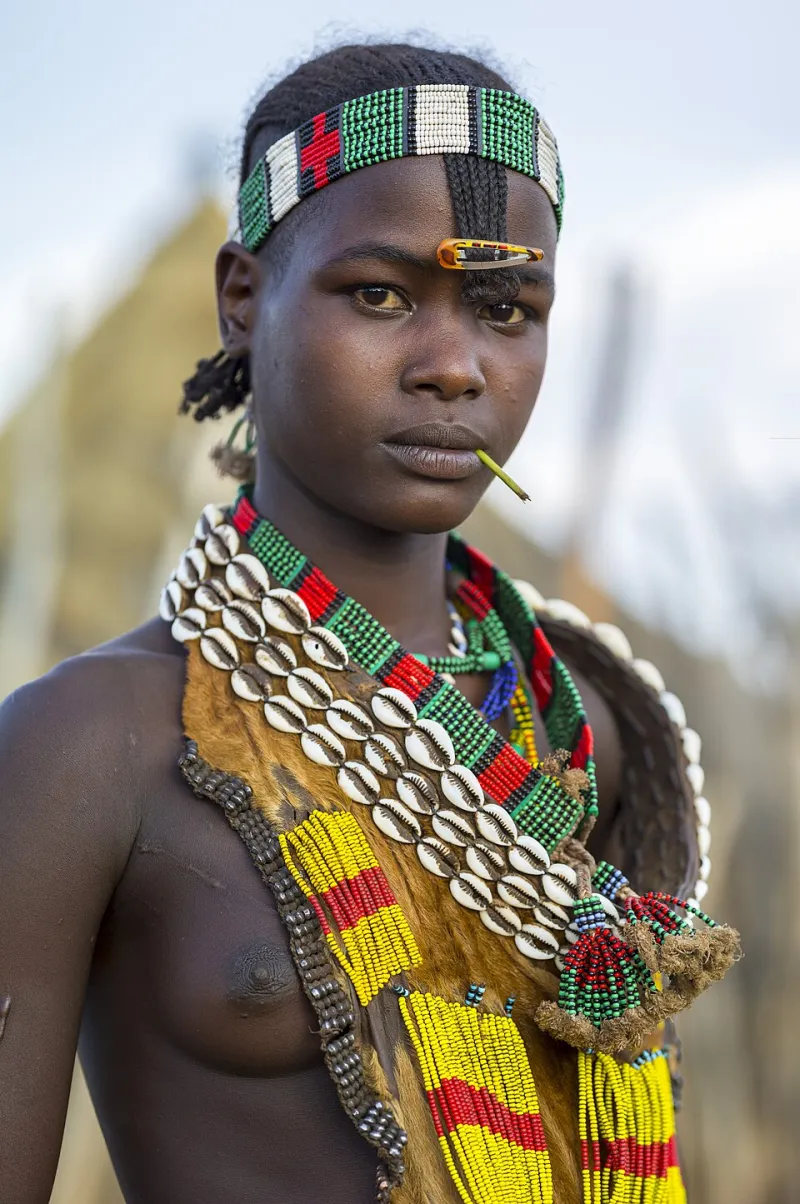
Photo: Alfred Weidinger from Vienna, Austria, CC BY 2.0, via Wikimedia Commons
In 1974, the fall of Emperor Haile Selassie did not bring Oromo speakers the linguistic recognition they had long sought. Successive Ethiopian governments continued to privilege Amharic as the singular national tongue, marginalizing Afaan Oromoo—spoken today by an estimated 40 to 45 million people within Ethiopia alone, and by millions more across the Horn of Africa and in diaspora communities stretching from Minneapolis to Melbourne. It remains, by most demographic measures, the most widely spoken Cushitic language on Earth. And yet, for most of the twentieth century, it existed at the edges of institutional life.
That marginalization is increasingly difficult to sustain in the age of the smartphone.
From the Margins to the Newsfeed
The transformation is both grassroots and global. On TikTok, Oromo content creators publish poetry, comedy sketches, and political commentary entirely in Afaan Oromoo, accumulating hundreds of thousands of followers across multiple continents. On YouTube, language tutorial channels designed explicitly for second-generation diaspora youth—those born in Columbus, Ohio, or in the suburbs of Washington, D.C., who grew up hearing the language at home but never formally learning to read it—are registering remarkable viewership numbers. Facebook groups dedicated to Oromo literacy have become informal classrooms, with volunteer instructors correcting grammar and sharing downloadable worksheets.
This is not incidental. It reflects a deliberate and emotionally charged act of cultural reclamation. Afaan Oromoo uses the Latin-based Qubee script, adopted officially in 1991 following the fall of the Derg regime. That script, designed in part to distinguish Oromo orthography from Amharic's Ge'ez-derived Fidel alphabet, carries symbolic weight. For many Oromo speakers and advocates, Qubee is not merely a writing system—it is an assertion of identity. Seeing it rendered in a tweet or a Facebook caption, shared by someone in Seattle or Stockholm, carries a significance that goes beyond communication.
A Diaspora Driving Cultural Infrastructure
The Ethiopian and Eritrean diaspora in the United States is one of the largest African immigrant communities in the country, concentrated heavily in the Washington metropolitan area, Minnesota, and Texas. Within that broader community, Oromo Americans have increasingly invested in cultural infrastructure—community radio stations, digital newsletters, and podcast networks that broadcast primarily in Afaan Oromoo. Organizations such as the Oromo Studies Association have long maintained scholarly interest in the language, but the digital era has democratized that work, distributing it far beyond academic journals.
What is particularly notable from a policy standpoint is the economic dimension of this linguistic revival. Language is not merely culture—it is a market. As tech companies compete for users across sub-Saharan Africa, the commercial logic of supporting Afaan Oromoo has grown harder to dismiss. Google Translate added the language to its platform in 2020, a milestone that generated significant attention within Oromo communities worldwide. That single decision—made in a Mountain View boardroom—carried the kind of institutional validation that decades of academic advocacy had struggled to achieve.
Political Stakes in a Politically Charged Moment
It would be intellectually dishonest to discuss the Oromo language renaissance without acknowledging its political context. Ethiopia's contemporary politics are inseparable from questions of ethnic and linguistic identity. The rise of Prime Minister Abiy Ahmed, himself an Oromo speaker, initially raised expectations among many in the community. The subsequent political turbulence—including the conflict in Oromia and the broader instability that has marked Ethiopia since 2018—has made the language question more charged, not less.
For diaspora communities in the United States, digital language use has become a form of political expression as much as cultural preservation. Oromo-language Twitter accounts have served as rapid-response information networks during periods of civil unrest, distributing news and documentation in ways that bypass what many Oromo activists describe as a systematically Amharic-centric media ecosystem. This intersection of language rights and digital access is not unique to Ethiopia—it echoes debates familiar to American audiences around Spanish-language media, Indigenous language revitalization efforts in the American Southwest, and the politics of algorithmic content moderation in non-English languages.
What Language Preservation Tells Us About African Soft Power
For analysts and policymakers focused on Africa's long-term development trajectory, the Oromo language renaissance offers a revealing case study. Soft power—the capacity to shape narratives, attract cultural allegiance, and project influence without coercion—has historically been discussed in the context of nation-states. But what happens when a linguistic community, dispersed across multiple countries and continents, begins to build its own cultural infrastructure through digital platforms?
The implications are significant. A generation of young Oromo speakers who maintain active literacy in Afaan Oromoo, who consume media in that language and produce content within it, represents a form of distributed cultural capital. That capital does not necessarily map neatly onto any single political agenda, but it does create networks of affiliation and shared identity that will shape Ethiopia's internal politics and its external cultural presence for decades to come.
From a development economics perspective, multilingual digital ecosystems also tend to be more equitable ones. Research consistently shows that access to information in one's native language correlates with improved educational outcomes, greater economic participation, and more robust civic engagement. Ethiopia, with its extraordinary linguistic diversity—over 80 recognized languages—faces both a challenge and an opportunity in this regard.
The Road Ahead
The digital renaissance of Afaan Oromoo is neither complete nor without obstacles. Algorithmic bias on major platforms continues to disadvantage low-resource languages, meaning that Oromo-language content often receives less favorable distribution than equivalent content in English or Arabic. Keyboard support for Qubee, while improved, remains inconsistent across devices and operating systems. And the political volatility within Ethiopia creates real risks for digital activists who use the language as a vehicle for dissent.
Yet the momentum is undeniable. What began as informal networks of diaspora communities preserving a connection to home has evolved into something more deliberate and more consequential: a coordinated, if decentralized, effort to ensure that one of Africa's most spoken languages occupies its rightful place in the digital public square.
For American audiences attuned to the ongoing conversations about language rights, digital equity, and the politics of representation, the story of Afaan Oromoo's digital revival is not a distant foreign-affairs curiosity. It is a mirror, reflecting questions that democratic societies everywhere have not yet finished answering.